
You're already in Abu Dhabi, the meeting's on time, and the driver's route looks simple enough, until the bill includes an abu dhabi toll you didn't expect. That moment catches a lot of visitors, executives, and fleet managers off guard because the system isn't a kilometre-by-kilometre road fee, it's a targeted charge on specific crossings at specific times. For anyone moving between Dubai, Abu Dhabi Island, airports, hotels, and business districts, knowing how the DARB toll system works helps you plan cleaner routes, avoid unnecessary costs, and keep schedules tight. It also matters for chauffeur operators, because toll exposure now sits inside the cost of every trip rather than being an occasional nuisance.
Table of Contents
- Introduction to the Abu Dhabi Toll System
- How the DARB Toll System Works
- Payment Methods and How to Pay
- Penalties and Exemptions
- Tips for Corporate Travelers and Chauffeur Services
- Frequently Asked Questions
- Conclusion: Navigating the Abu Dhabi Toll with Confidence
Introduction to the Abu Dhabi Toll System
A business traveller lands at Abu Dhabi Airport, checks into a hotel, then heads across the island for a meeting in the Corniche area. The route looks straightforward, until the driver passes a tolled bridge and the trip becomes more expensive than expected. That surprise is exactly why the Abu Dhabi toll system deserves a clear explanation before any repeat trip, especially for visitors who rely on private cars, rental vehicles, or chauffeur services such as Dubai to Abu Dhabi transportation services.
Abu Dhabi's DARB toll system began collecting road tolls on 2 January 2021 and became the emirate's first permanent electronic road-pricing scheme for access to Abu Dhabi island via the main bridge corridors, according to UAE government transport guidance on the UAE official transport information page. It was introduced as a congestion-management measure, not as a blanket charge on every road. For travellers, the practical rule is straightforward. The charge applies in a defined place, at a defined time, and only when a vehicle crosses one of the tolled entry points.
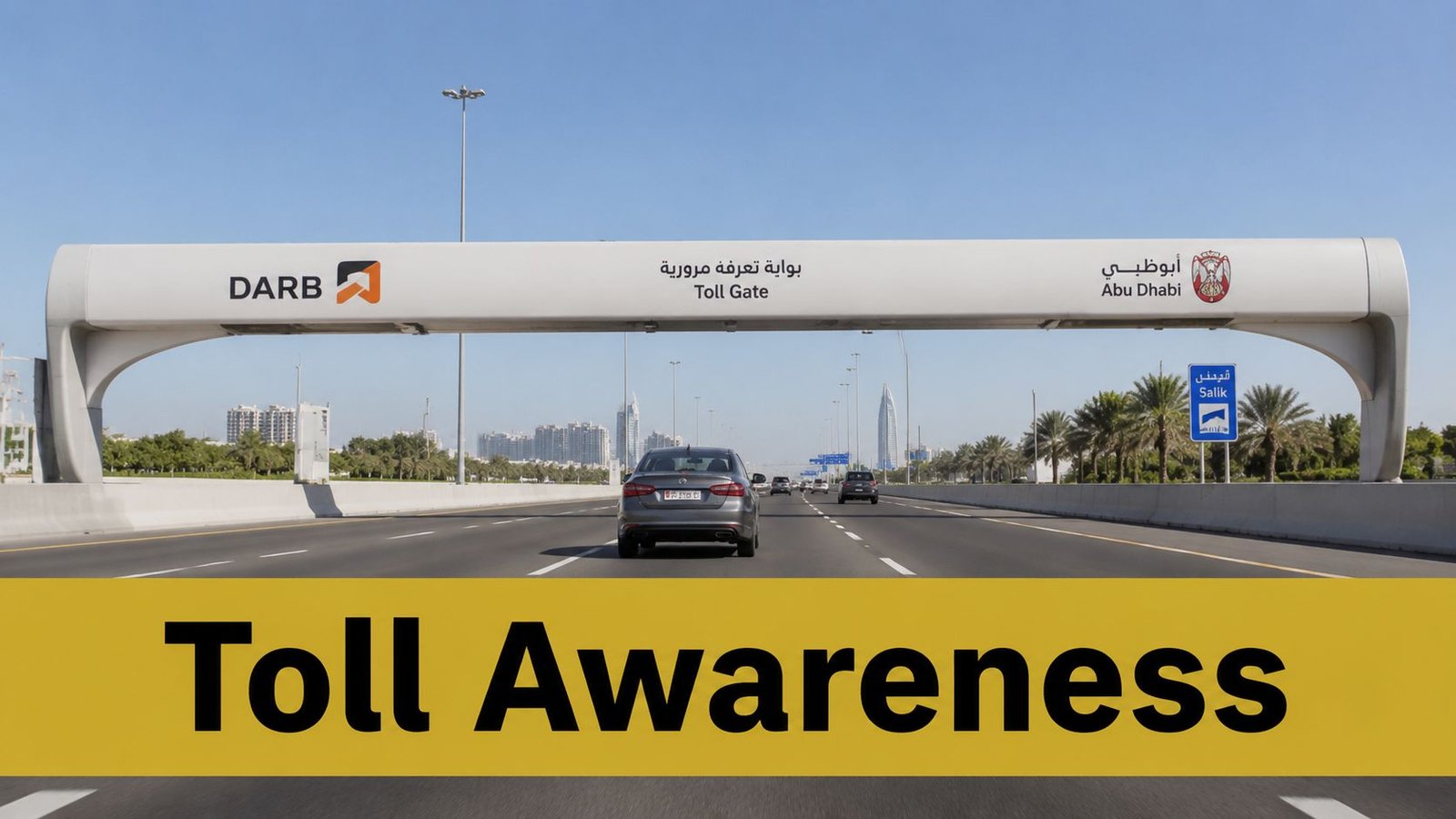
For executives and transport planners, that distinction matters. Treating the toll as a fixed travel input makes budgeting easier, helps sequence meetings more intelligently, and clarifies when a private car, chauffeur service, or intercity transfer is the better option. The hidden cost is not just the toll itself. For commercial fleets and luxury transport operators, timing, routing, and vehicle scheduling can change the total trip cost as much as the crossing fee does.
How the DARB Toll System Works
A busy morning at the bridge can make the system feel simple, but the logic behind DARB is more specific. The charge applies only when a vehicle crosses designated entry points into Abu Dhabi island during the toll window, so the variable is not distance, it is access at a particular time. For operators running executive cars, chauffeurs, or scheduled transfers, that detail changes how a route should be assigned and when a vehicle should move.
The original system covered four key entry bridges, Sheikh Zayed Bridge, Sheikh Khalifa bin Zayed Bridge, Al Maqtaa Bridge, and Mussafah Bridge, with a Dh4 charge per crossing during peak periods and no charge outside peak times, on Fridays, and on public holidays, as set out in UAE government transport information and later transport reporting on the scheme's structure. The official toll-gate model was built to influence when people cross, not just how far they drive. In practice, that means a driver crossing twice in one congested commute can face two separate toll events, while a carefully timed off-peak trip can avoid the charge altogether.
For route planning, the bridge layout matters as much as the timetable. A chauffeur moving a client onto the island should check the crossing point the same way a pilot checks a runway approach, because the toll is triggered by where and when the vehicle enters. If you need a refresher on how bridge names and approach routes appear on the road network, the UAE road signs reference page helps make the corridor logic easier to read.
Practical rule: if a trip can be shifted out of a charged window without hurting the client experience, the savings and operational simplicity usually justify the change.
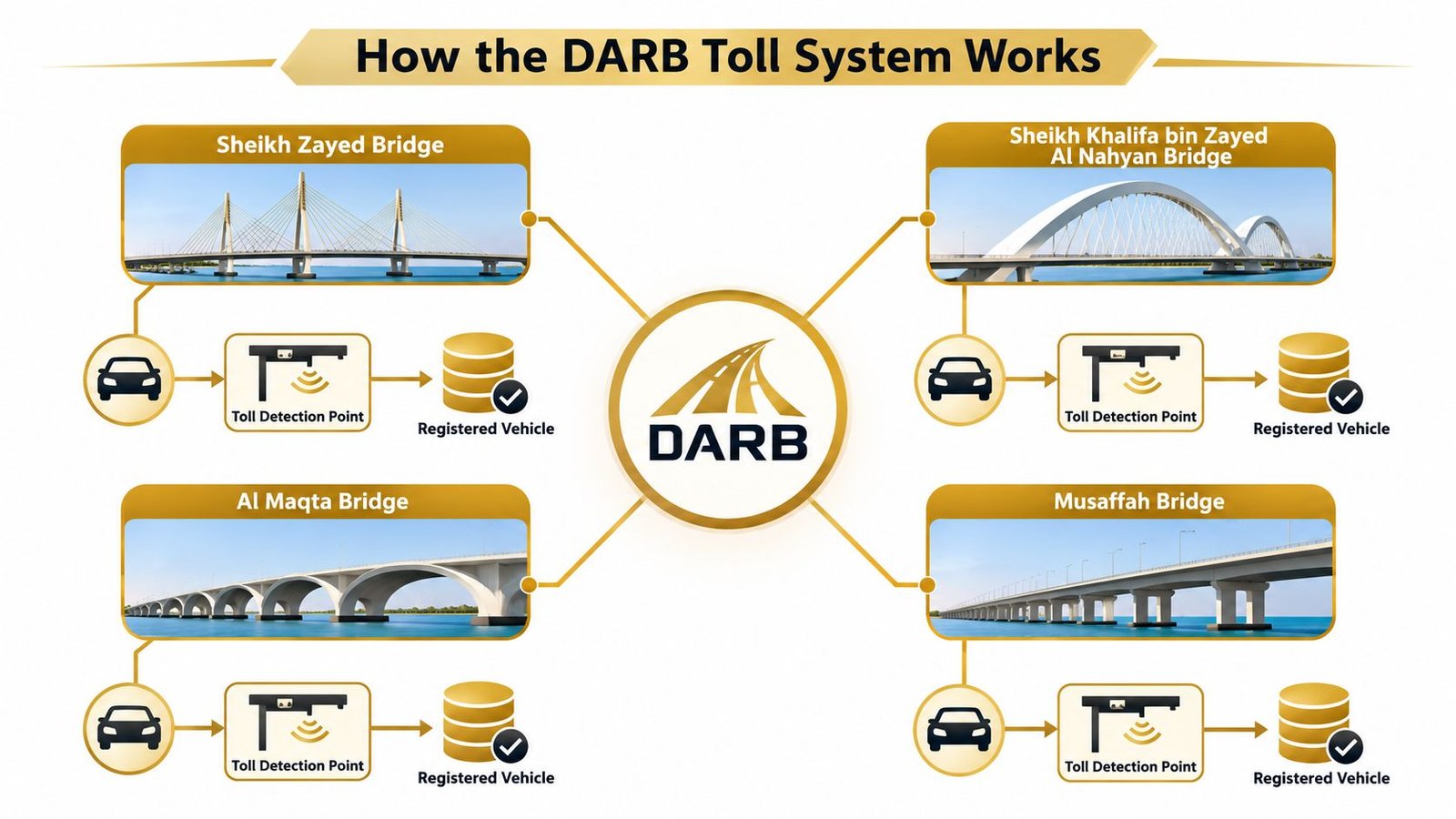
For commercial fleets, the hidden cost is often scheduling pressure. A vehicle that crosses at the wrong time can add a small but repeated expense to every airport run, hotel transfer, or client pickup, and those costs become more visible once a fleet is operating across several daily journeys. Luxury transport operators face the same issue, but with a different margin profile, because the client expects punctuality while the dispatcher still has to choose between convenience and toll exposure.
What the bridge locations mean for daily routing
Each tolled bridge plays a different role in traffic flow, but the operational effect is the same. If a chauffeur is moving a client from Dubai to a hotel on Abu Dhabi island, the toll point is part of route design, not an afterthought. A thoughtful dispatcher will look at pickup time, arrival window, and whether the client's destination sits on the island or outside it.
That also means signage awareness matters. A driver who can read approach signs and understand which corridor leads to which bridge is less likely to miss a toll point or build in unnecessary delay. For teams that manage new drivers or visiting chauffeurs, the bridge network should be treated like a fixed control point in the journey plan, not a vague area on the map.
Why peak timing matters more than distance
A short journey can still trigger the toll if it crosses during the charge window, while a longer detour that avoids the peak period can be cheaper overall. That is why many corporate transport teams plan around appointment time rather than road length. For regular movements, the smart question is not “How far is it?”, it's “When will the vehicle pass the gate?”
Payment Methods and How to Pay
Paying the abu dhabi toll is mostly about preparation. Once the vehicle is linked to the toll system, the administrative side becomes much easier, but drivers, residents, and visitors still need to know where the charges appear and who is responsible for settling them. That is especially true for rental cars and business fleets, where the person driving is not always the person paying.
For local users, the cleanest approach is to make sure the vehicle is registered in the toll account and the payment method is active before the first trip. For visitors, the process is usually handled through the rental company or the fleet operator, so the driver should confirm in advance whether tolls are billed separately or included in the service terms. That one check can prevent awkward post-trip reconciliation later.
| Abu Dhabi Toll Payment Options Compared | Best For | Setup Time | Key Limitation |
|---|---|---|---|
| Toll account linked to a registered vehicle | Residents and regular commuters | Before travel | Needs advance setup |
| Fleet or company account | Corporate vehicles and chauffeur operators | Before operations start | Requires internal admin control |
| Rental-car billing through the provider | Visitors and short-stay users | Usually handled by the rental company | Driver may not see the charge immediately |
| Manual review of trip statements | Occasional users checking past crossings | After the trip | Doesn't prevent the initial charge |
A disciplined workflow helps. First, confirm whether the vehicle already sits inside the toll system. Second, make sure the payment method is valid. Third, review toll statements regularly so any crossing that should have been accounted for is visible quickly. For companies running multiple cars, that review should be part of normal transport reconciliation, not a separate afterthought.
The same logic applies if you use a specialist transport provider such as NSB Luxury Transport's chauffeur and transport services, because the value is in knowing whether route costs are embedded, itemised, or passed through. That clarity matters more than whether the trip is one car or ten.
Operational habit: confirm toll handling before dispatch, not after invoicing. It saves time for both the organiser and the driver.
Penalties and Exemptions
The best way to view penalties and exemptions is as two sides of the same system, compliance on one side, relief on the other. If you drive a vehicle that should be paying and the account is unmanaged, the consequence is administrative friction. If you belong to an eligible category, the system also provides specific relief rather than expecting everyone to pay the same way.
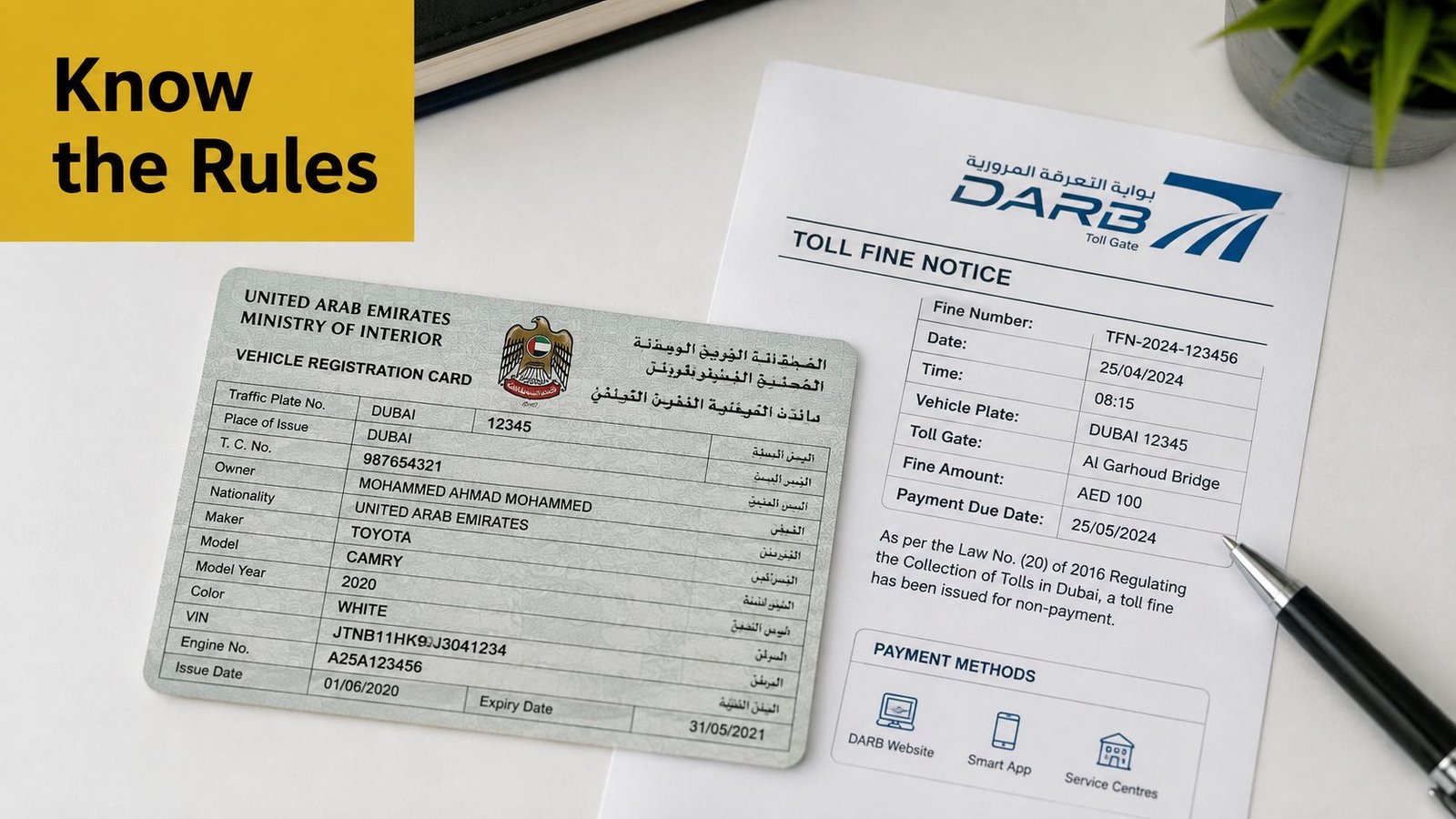
Official UAE government information says Abu Dhabi introduced exemptions for senior Emiratis, People of Determination, low-income Emiratis, and retired Emiratis, with the exemption limited to one vehicle per eligible owner. That matters because the system is not designed as a blanket waiver. It is tied to ownership and eligibility, so families or organisations should check which vehicle is registered to the eligible person before assuming relief applies across a whole household or fleet.
Exemption status compared with normal compliance
- Eligible owners, may receive relief for one vehicle when the registration matches the approved category.
- Non-eligible private drivers, should expect the toll to apply whenever the vehicle crosses during the charged period.
- Fleet operators, need to track which vehicles are exempt and which are not, because a mixed fleet can easily produce avoidable billing errors.
I'd treat the exemption list as an administrative checkpoint, not a comfort blanket. If a driver or company believes they qualify, the registration records should be aligned before regular travel begins. If they don't qualify, the practical response is to manage timing and route choice carefully, because the automatic nature of the toll system makes it easier to prevent a problem than to fix one later.
For readers who need to verify broader travel document compatibility while organising vehicles, the transport guidance in this UAE driving licence reference can also help with related cross-border and compliance checks.
Tips for Corporate Travelers and Chauffeur Services
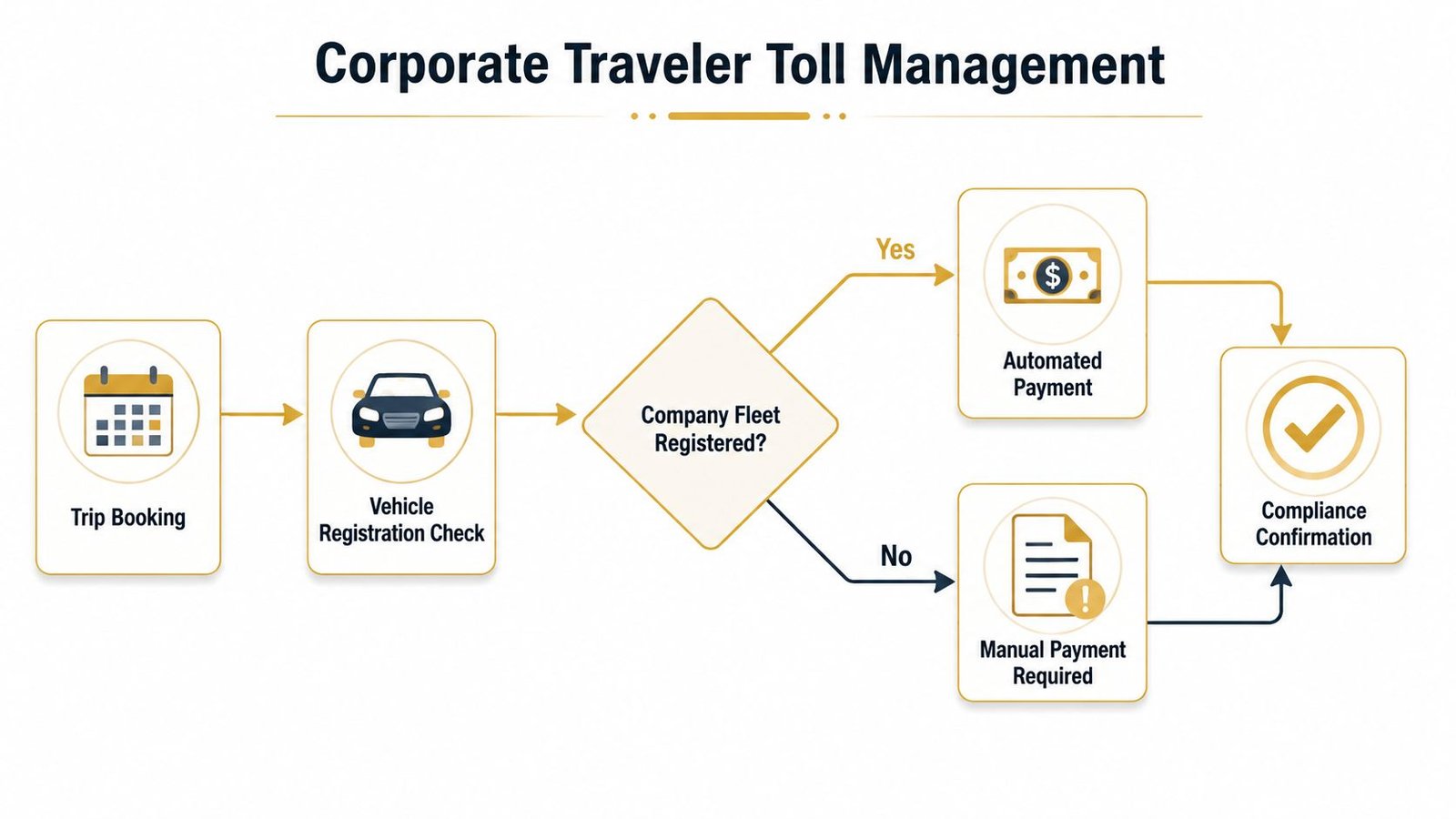
A corporate trip can look straightforward on paper and still become expensive once repeated toll crossings start to stack up. The 2025 rule shift changes that equation. After the removal of the daily and monthly caps for private vehicles, every extra tolled crossing matters more, so transport planners need to treat tolls as a live operating cost rather than a capped expense line.
For fleet managers, the first adjustment is timing. If a client meeting can begin a little later, an off-peak arrival may reduce toll exposure without changing the service standard. If a chauffeur is handling several pickups in the same area, consolidating those trips into one route is usually cleaner than sending separate cars. That matters especially for executives moving between DIFC, Business Bay, Dubai Marina, and Abu Dhabi, where tight schedules often push vehicles into the most costly windows.
What smart fleet control looks like
- Plan departures around peak windows, because the toll is triggered by crossing time, not only by route length.
- Consolidate nearby stops, so one vehicle handles more of the day's movements.
- Track tolls as a variable cost, not a fixed overhead, because route choice changes the total.
- Review crossing patterns monthly, so recurring inefficiencies are visible.
- Use vehicle assignment rules, especially when some cars are exempt and others are not.
For executive transport teams, consistency matters as much as routing. Chauffeur teams that monitor toll exposure can keep service quality high while reducing avoidable cost leakage on routine work. In practice, that means pairing route planning with clear invoicing and simple client expectations. The result is less back-and-forth after the journey and a more reliable margin on repeated trips.
A structured transport partner can help here as well. NSB Luxury Transport offers chauffeur-based transfers and corporate vehicle support, which makes it easier to plan around tolls when trips regularly cross Abu Dhabi, and its luxury car services page provides a direct reference point for operators comparing service options. That is a practical point, not a marketing one. It gives planners a way to fold toll awareness into the booking process instead of leaving it to the driver on the day.
Frequently Asked Questions
Do tolls apply on weekends in Abu Dhabi
No, the original DARB model did not charge on Fridays, and the current toll design still focuses on defined peak periods rather than all-day charging across the week.
What happens if a vehicle crosses more than one gate in a trip
Each tolled crossing is treated separately. If a route passes through multiple tolled points during charged periods, the cost can build quickly, so drivers should think about the whole route, not only the first gate.
How do rental cars handle the Abu Dhabi toll
Rental-car billing is usually handled through the provider, which means visitors should ask in advance whether tolls are included, tracked separately, or charged after the trip. That clarity matters more than the handover process itself.
Are the Ghantoot and Al Qurm gates open all the time
Recent reporting says the newer Ghantoot and Al Qurm gates operate 24/7, which expands enforcement beyond the older bridge-peak model. Drivers should therefore check the current route rules before assuming the old pattern still applies.
Is the toll system only for private drivers
No, the system affects private drivers, fleets, and transport providers whenever a tolled crossing is made during the applicable charge period. The impact is biggest for repeated business travel and airport transfers.
Can exempt drivers use more than one vehicle
The official exemption guidance limits relief to one vehicle per eligible owner. If a household or company uses more than one car, each vehicle needs to be checked separately.
Conclusion: Navigating the Abu Dhabi Toll with Confidence
The abu dhabi toll system is easier to manage once you understand its purpose, location, and timing. It was created to reduce congestion on key entry corridors, not to turn every trip into a blanket charge, and that distinction helps both travellers and transport planners make better decisions. The biggest mistake is assuming all crossings are the same. They're not, because the charge depends on when and where the vehicle passes.
For executives, tourists, families, and fleet managers, the practical answer is preparation. Confirm how the vehicle is registered, understand when the toll applies, and plan routes with the charging window in mind. That approach protects both schedule and budget, especially now that toll costs matter more for repeated crossings and corporate transport operations.
Professional chauffeur support also makes this easier. With fixed-price transfers, corporate travel coordination, and cross-emirate mobility planning, transport teams can reduce surprises and keep the journey smooth from pickup to drop-off. If you want a reliable way to organise trips that may involve Abu Dhabi toll crossings, the right transport partner can save time, reduce admin, and keep the experience consistent.
If you're planning a transfer, an executive journey, or a cross-emirate trip that may involve the Abu Dhabi toll, visit NSB Luxury Transport to arrange chauffeur services, airport transfers, or corporate transport with clear trip planning and professional support. Their team can help you choose the right vehicle and schedule so toll-related route decisions stay simple from the start.
Book Your Chauffeur Service
Fast booking support for airport transfers, chauffeur service, and private car with driver in Dubai.
WhatsApp: +971 525 579 638
Email: booking@nsbluxurytransport.com
Website: www.nsbluxurytransport.com