

You’re probably looking at Salalah Oman distance from Dubai for one reason, you need to decide whether to drive, fly, or book a private car and stop wasting time on conflicting numbers. The headline figure matters, but it’s not the whole story. On this corridor, border routing, crossing delays, and road choice shape the trip just as much as distance does, so the wrong plan can turn a manageable journey into a long, tiring day.
If you’re comparing a flight out of DXB with a cross-border drive to Salalah, the question isn’t just how many kilometres separate the two cities. It’s which option gets you there with the least friction, the least uncertainty, and the most comfort.
Plan Your Dubai to Salalah Journey with NSB Luxury Transport
Need a comfortable and reliable travel option after checking the Salalah Oman distance from Dubai? Contact NSB Luxury Transport for professional chauffeur service, luxury vehicles, flexible pickup times, and cross-border travel assistance between the UAE and Oman.
Table of Contents
- Why the Salalah Oman Distance from Dubai Matters for Travelers
- Road, Aerial, and Coastal Distance Explained
- Driving Routes from Dubai to Salalah
- Flights from Dubai to Salalah
- UAE to Oman Border Crossing and What to Expect
- Why a Private Chauffeur Works for This Route
- Travel Tips for the Dubai to Salalah Journey
- Frequently Asked Questions and Booking
Why the Salalah Oman Distance from Dubai Matters for Travelers
A traveller leaving Dubai International and choosing between a flight and a long road run is making an operations decision, not a geography one. The Salalah Oman distance from Dubai looks simple on paper, but the core issue is how much of that distance you can absorb after border formalities, fuel stops, and the fatigue that builds on a long GCC corridor. Route references place the road journey at about 1,220 to 1,226 km and the aerial distance at roughly 918 to 923 km. For travellers who want the road leg handled properly, a private chauffeur service from Dubai to Musandam shows the kind of planning that keeps a cross-border transfer under control.
That gap is why people misread the trip. A map app makes the line look tidy, but the workload is different once you are on the road. You are covering kilometres, crossing a border, managing fuel, and deciding whether the driver should complete the stretch in one push or split it into parts.
Practical rule: if the trip matters for a meeting, family arrival, or hotel check-in, treat it as a same-day endurance journey, not a casual intercity run.
Dubai to Salalah at a Glance
| Metric | Figure | Notes |
|---|---|---|
| Road distance | About 1,220 to 1,226 km | The standard inland driving baseline from Dubai to Salalah |
| Straight-line distance | About 918 to 923 km | Aerial distance is much shorter than the road figure |
| Normal drive time | About 12 to 13 hours | Works only if border flow and stops stay light |
| Extended drive time | About 12 to 16 hours | Includes rest stops and possible border delays |
| Direct flight time | About 2 hours | Faster in the air, but not always faster door to door |
The route matters because this is long enough to require structure. If comfort and predictability matter, you need a transport plan, not just a distance number.
Road, Aerial, and Coastal Distance Explained
On this route, the headline number only helps if you know which version of the trip you are talking about. The road distance from Dubai to Salalah is commonly shown in the 1,220 km to 1,285 km range, with several travel references landing close to 1,226 km or 1,220.2 km. The air distance is much shorter, usually around 918 km to 927 km, which is why the flight feels far quicker even before you factor in border checks and ground transfers. Trippy, Airport Distance Calculator
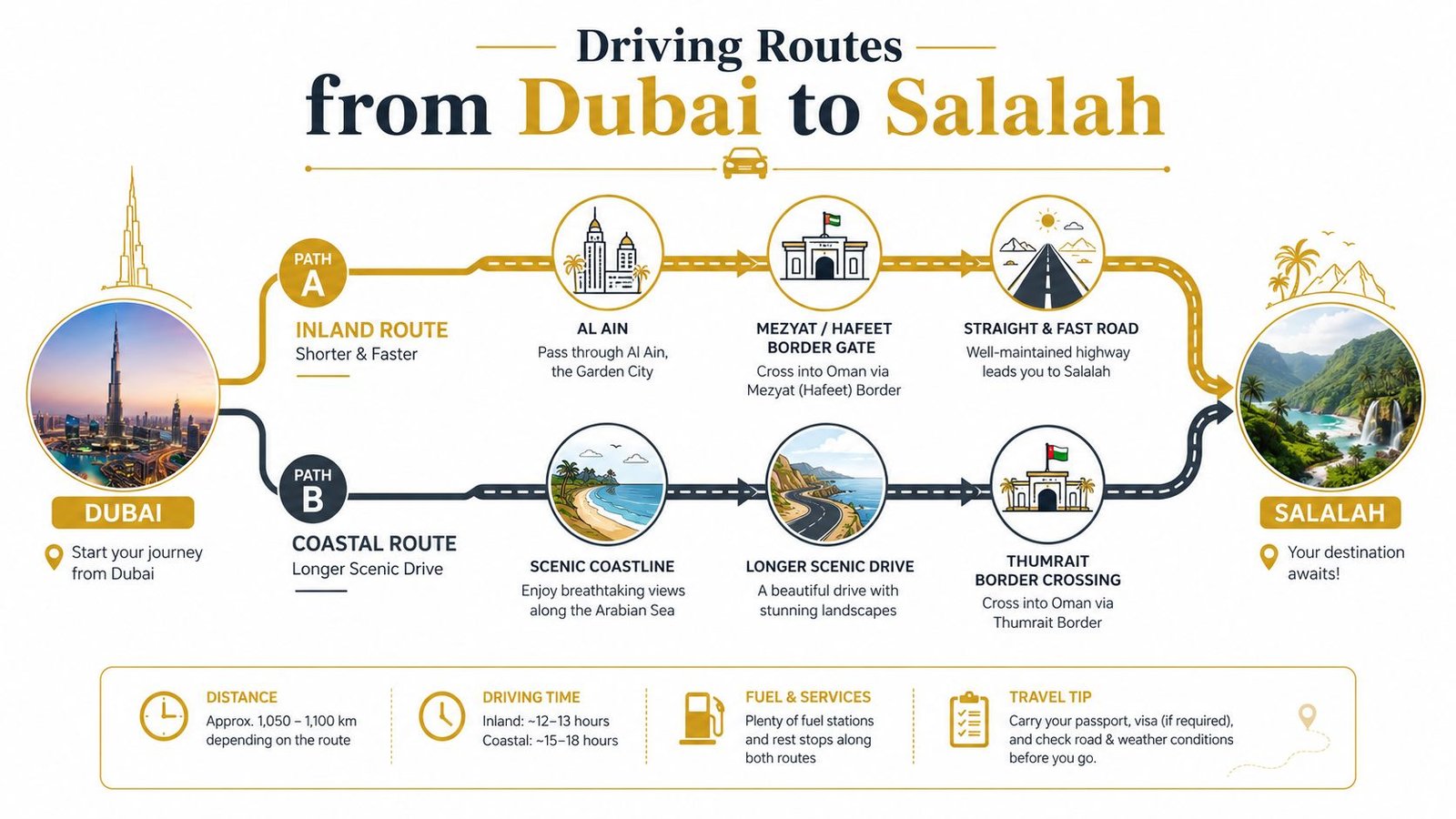
Route choice is what creates the confusion. One regional travel guide treats the inland route through Al Ain and the Mezyat, also called Hafeet, border as the shorter standard path at about 1,220 km, while the coastal route can stretch to almost 1,900 km and take about 20.5 hours of nonstop driving. That gap is not a typo, it reflects how the UAE and Oman road network bends around terrain and border access. The Road Reel
Why the numbers vary so much
The inland option is the first route to evaluate because it is the practical one. The coastal alternative may look appealing if you want more shoreline driving, but it adds a serious amount of time and planning overhead. The same origin and destination can shift by almost 680 km depending on the road you choose, so a single headline figure tells you very little on this corridor.
The clean way to read the figures is simple. Road distance tells you how demanding the drive will be. Aerial distance explains why the flight is shorter. Coastal distance shows what happens when scenery takes priority over speed. Those are three different travel decisions, not three conflicting facts.
If someone gives you only the shortest number, ask which border crossing and which road alignment they mean. On Dubai to Salalah, that detail changes the whole trip.
Dubai to Musandam private car is a useful comparison point for another GCC cross-border drive, but Salalah is a different level of planning because the journey is much longer and border timing matters far more.
Driving Routes from Dubai to Salalah
For this route, I'd send most travellers inland through Al Ain to Mezyat, or Hafeet, border line. It is the straightforward choice. It keeps the drive direct, avoids the ugly detour the coastal option can create, and gives you a route that makes sense for a long cross-border run. One travel source treats the inland route as the standard path to Salalah, with the drive measured at roughly 1,220 km and normal travel time in the 12 to 13.5 hour range, depending on stops. Pitstop Arabia
The route logic
Leave Dubai, head towards Al Ain, cross into Oman at Mezyat or Hafeet, then continue south through the interior until you reach Salalah. That is the route most drivers mean when they talk about driving to Salalah, because it is the shortest workable land option. The coastal road exists, but it is for travellers who care more about the drive itself than about getting in on time.
The road trip is not hard in terms of navigation. It is hard in terms of stamina. One credible planner describes nonstop driving as roughly 11 hours 46 minutes to 16 hours, which is why I treat this as a 12.5-hour-plus continuous-drive mission rather than a normal transfer. A practical way to plan it is to map your departure and recovery stops around the whole day, not around the idea that you can power through. If you are sorting your arrival plans in Dubai first, a useful reference is how many airports are in Dubai, because that affects how cleanly you can connect your timing before a long overland run.
What that means in practice
If you are carrying family, luggage, or business equipment, the inland route gives you a predictable spine for the trip. It also lets you control fuel stops and rest breaks properly, which matters more than first-time travellers usually expect. The longer coastal road only makes sense if you are deliberately choosing scenery over arrival time.
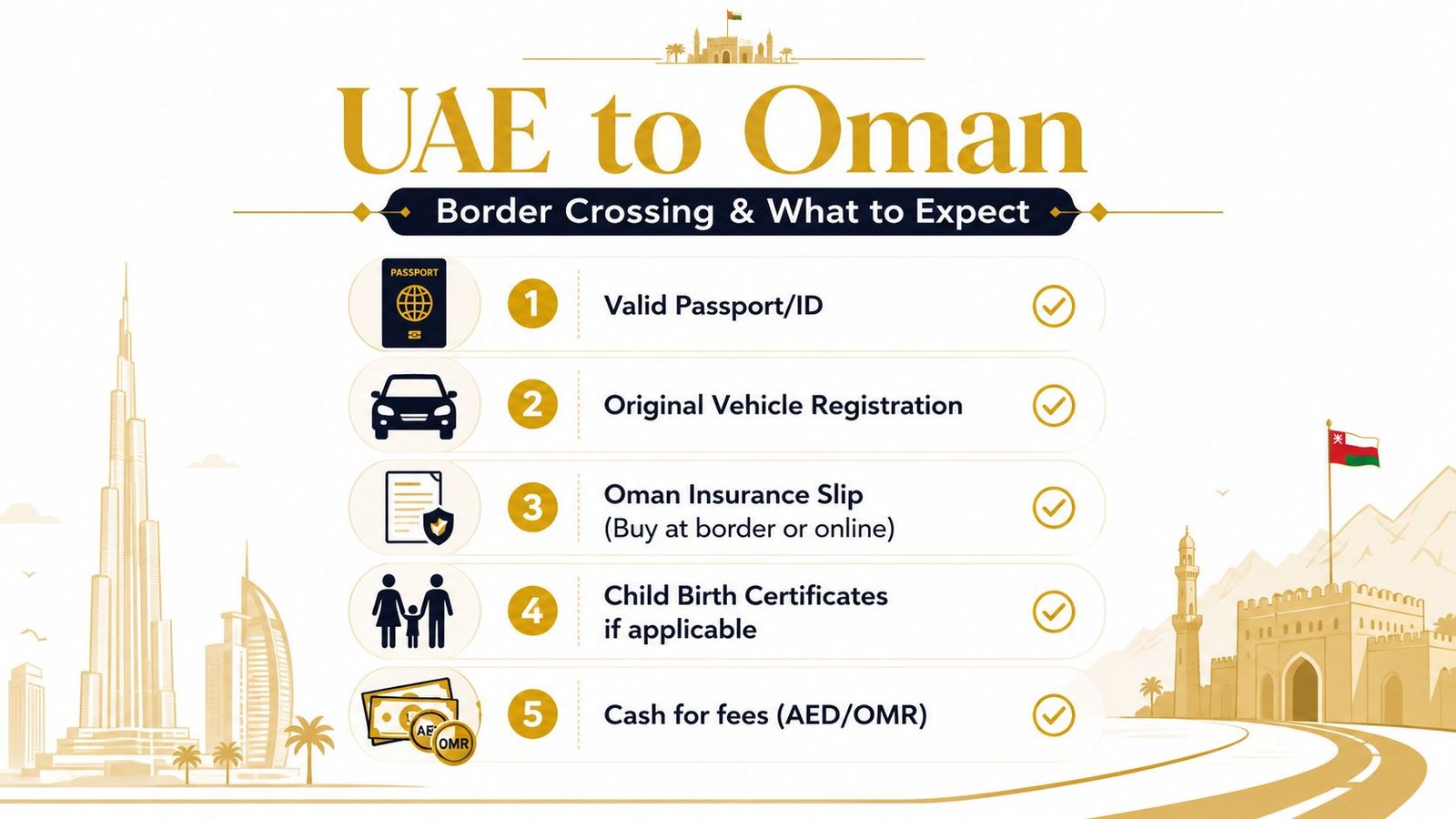
The short version is simple. Take the inland route if you want a clean arrival plan. Take the coastal route only if the drive itself is part of the holiday and you are comfortable paying for those extra hours.
Flights from Dubai to Salalah
Flying is the fastest way into Salalah, and for a straight point-to-point move it usually saves the most time. There is a direct commercial service between Dubai International Airport, DXB, and Salalah, SLL, with one source noting that flydubai runs it daily and that the flight itself takes about 1 hour 55 minutes. The aerial distance on this corridor is roughly 918 to 927 km, so the air option cuts the journey down sharply compared with the road trip. Direct Flights
Use the plane when the schedule matters. A short business trip, a fixed hotel check-in, or a family itinerary all favour flying because it removes border delays, fuel stops, and the fatigue that comes with a long drive. If you are travelling with children or trying to keep a tight weekend plan, air travel is the cleaner choice.
Airport time still counts. You have to reach DXB, clear check-in, wait to board, land, and then make the transfer from SLL into town. That overhead does not erase the speed advantage, but it does mean the total journey is less dramatic than the in-air flight time suggests.
Driving versus flying
| Factor | Driving | Flying |
|---|---|---|
| Main advantage | Flexibility | Speed |
| Border exposure | Yes | No |
| Fatigue | High | Low |
| Luggage freedom | Strong | Moderate |
| Door-to-door simplicity | Variable | Better for fixed schedules |
My view is straightforward. If the trip is tied to a meeting, a hotel arrival window, or family timing, fly. If you need multiple stops, want your own vehicle, or plan to spend significant time in Oman by road, drive. Choosing only on distance is the mistake, because the true test is the full door-to-door schedule.
If you are routing through the city before departure, how many airports in Dubai is a useful planning reference, since airport choice affects the whole timetable.
UAE to Oman Border Crossing and What to Expect
The border turns a straightforward drive into a managed cross-border move. For the Dubai to Salalah land route, plan around Mezyat, or Hafeet, because that is the checkpoint that shapes the rest of the day. Border timing is the part that decides whether the trip feels controlled or chaotic, especially on busy travel days.
Carry the right documents
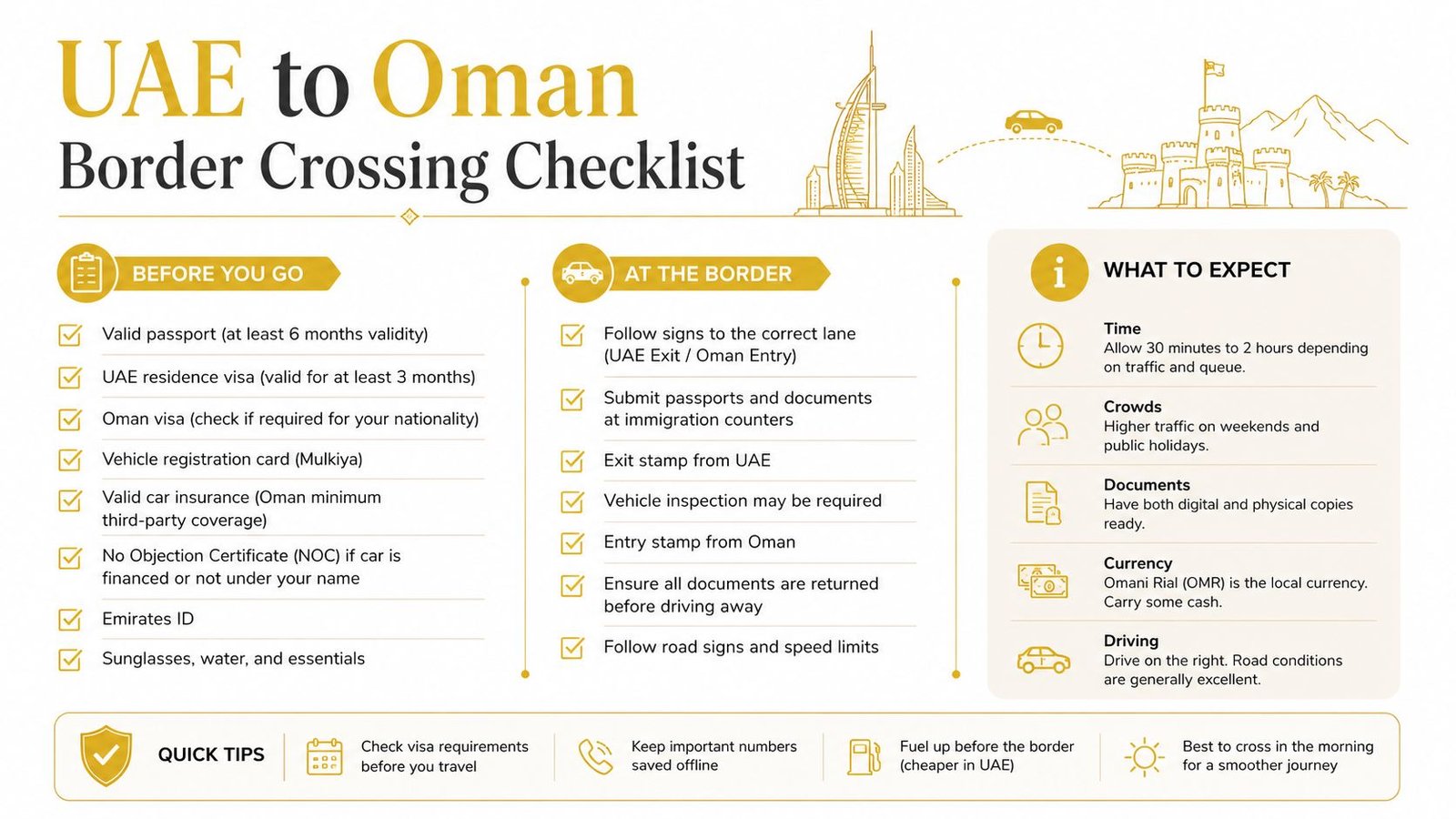
Show up prepared, not hopeful. You need a valid passport or ID, vehicle registration, Oman insurance, and, where relevant, child birth certificates. If anything is missing, the checkpoint does not bend for convenience, and the delay becomes your problem immediately.
Plan for the queue, not just the drive
This is the detail distance pages usually gloss over. Border time changes with traffic, holidays, and the time you arrive, and that can wipe out the tidy estimate you saw before leaving. A trip that looks like a smooth 12 to 13 hour run can stretch once the crossing is busy, especially on peak travel days.
If your nationality requires an Oman tourist visa before travelling, our sister company, NSB Tourism LLC can assist you with your Oman Visit Visa application from the UAE. Their experienced visa consultants provide professional guidance on eligibility, required documents, application procedures, and the latest entry requirements, helping you prepare for a smooth journey to Oman.
Leave early, keep the papers in one place, and treat the border as a timed checkpoint, not a random stop. Weekend crossings move differently from weekday crossings, and that difference matters when you are trying to keep the full day under control.
The cleanest border crossing is the one you reach with time in hand, not the one you rush towards after a late start.
If you are travelling with children, this Dubai to Oman family travel guide by private chauffeur is worth reading before you set off, because family trips fall apart fast when the paperwork and waiting time are not planned properly.
Why a Private Chauffeur Works for This Route
For Dubai to Salalah, I prefer a private chauffeur over a self-drive whenever the trip has a deadline, passengers, or real luggage. The route is long enough that one driver doing everything himself can become a liability, not a convenience. This is not a short city transfer. It’s a 12.5-hour-plus continuous-drive mission where rest, fuel, and alertness need to be managed properly.
What a chauffeur actually solves
A professional driver handles the boring but critical parts, the timing, the pacing, the rests, and the border discipline. That matters because long-haul GCC driving is less about raw driving skill and more about consistency. If someone is unfamiliar with the route, the mistakes show up at the wrong time, usually late in the day when fatigue is already high.
A private chauffeur also reduces decision fatigue for passengers. You’re not trying to interpret border flow, decide whether to stop, or worry about whether the next fuel stop is a good one. The trip stays structured, and that structure is what keeps the journey calm.
Comfort matters more on this route
Luxury transport is not about vanity on a road like this, it’s about endurance. A proper vehicle gives executives, families, and small groups the space to rest, work, or sleep while the route is being handled by someone whose job is to stay focused on the road. That’s a much better use of energy than making a tired traveller responsible for eight to sixteen hours of cross-border planning.
Luxury car service Dubai is the right model to compare here because the value is in the controlled experience, not just in the car itself.
For this corridor, the biggest premium isn’t leather seats. It’s predictability.
Travel Tips for the Dubai to Salalah Journey
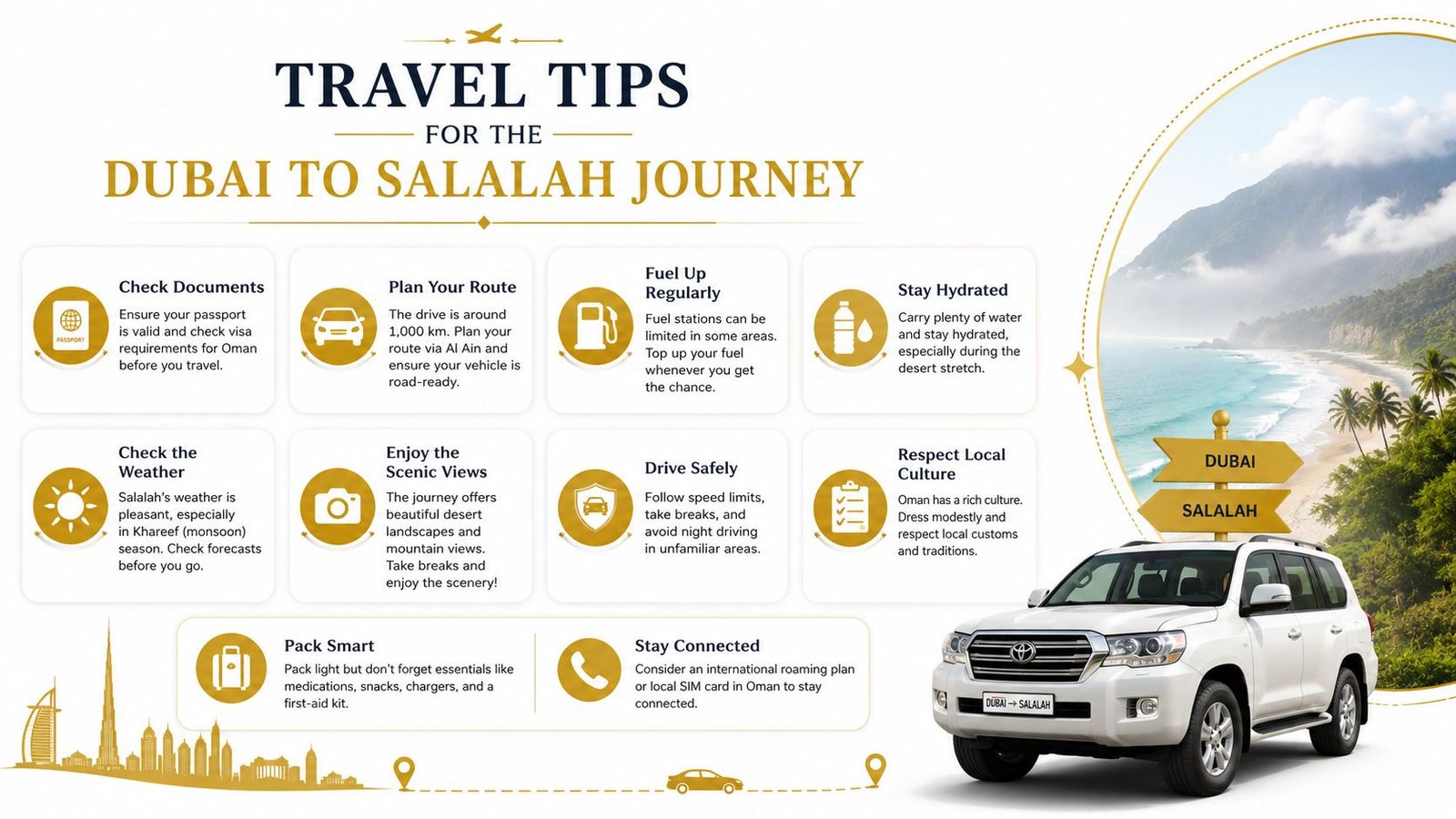
Leave early and treat that decision as part of the route plan, not a nice extra. A dawn departure keeps you ahead of border queues, gives you more daylight on the long interior stretch, and avoids the slow, draining last leg that turns into a night drive if you start late.
Keep the checklist tight
- Check vehicle coverage early. Oman insurance needs to be ready before you reach the border, and border staff will not sort that out for you.
- Carry fuel discipline. Start the long interior stretch with a full tank, because waiting too long to refuel adds risk and delay.
- Plan rest stops before you’re tired. Stop on your schedule, not after fatigue has already taken hold.
- Leave extra buffer for peak days. Weekends and public holidays can lengthen queue times at the crossing, so build slack into your timing.
- Treat the return leg seriously. The drive back asks for the same alertness, the same pacing, and the same border discipline as the outbound trip.
Weather changes the feel of the journey too. Salalah is most attractive during Khareef, which runs from July to September in the travel guidance, when the region turns greener and cooler than the surrounding UAE heat. Pitstop Arabia
If you are sorting who can legally drive, UAE driving licence valid countries gives useful background. The bigger point is simple, long cross-border roads reward planning, not improvisation.
Frequently Asked Questions and Booking
How long does the drive from Dubai to Salalah take?
Plan on about 12 to 13 hours in normal conditions, and give yourself more time if you are stopping often or crossing on a busy day. Route planners often stretch that to 12 to 16 hours once delays are folded in, which is why a same-day drive only works with an early departure and strict pacing.
Is same-day arrival realistic?
Yes, but only if you leave early, keep stops efficient, and treat it as a long cross-border drive, not a routine regional transfer. Same-day arrival is a logistics choice, not a comfort choice. If you want to arrive rested and with less pressure, a flight is the better option.
Which border crossing should I use?
For this route, Mezyat, or Hafeet, is the crossing to plan around. It fits the standard inland route from Dubai to Salalah, and it is the checkpoint most travellers should base their timing on.
What insurance do I need?
You need insurance that covers Oman, and the vehicle paperwork should be ready before you join the crossing queue. Do not leave this to the border, sort it before departure.
Should I drive myself or book a chauffeur?
Book a chauffeur if you want the trip handled with less stress, better pacing, and fewer fatigue issues. Self-driving makes sense only if you already know the corridor, are comfortable with the long hours, and can handle border procedures without slowing down the day. For families, executives, and groups, the chauffeur option is the cleaner choice.
How do I book the right vehicle for this route?
Choose the vehicle based on passenger count, luggage, and how much rest space you want during the drive. For long GCC runs, that matters more than brand names alone. If you are arranging a Dubai-to-Salalah trip, use a provider that understands cross-border planning, not just local transfers.
Book your ride with NSB Luxury Transport, available 24/7 across Dubai and the UAE. Whether you need airport transfers, chauffeur services, corporate transportation, full-day car hire, or cross-border travel to Oman and Saudi Arabia, professional chauffeurs and a luxury fleet are ready to assist. Book online at nsbluxurytransport.com or contact us via WhatsApp +971525579638
Related Dubai & Oman Travel Guides
Planning your road trip to Oman? Explore our related chauffeur services, travel guides, and cross-border transportation resources to help you plan a comfortable journey.
Dubai to Muscat Private Car
Book a luxury private chauffeur service between Dubai and Muscat with professional drivers and border assistance.
Dubai to Muscat Chauffeur Service
Travel from Dubai to Muscat in premium comfort with executive chauffeur-driven luxury vehicles.
Dubai to Saudi Arabia Luxury Chauffeur Service
Explore another premium GCC cross-border chauffeur service with luxury vehicles and experienced drivers.
Book Your Chauffeur Service
Fast booking support for airport transfers, chauffeur service, and private car with driver in Dubai.
WhatsApp: +971 525 579 638
Email: booking@nsbluxurytransport.com
Website: www.nsbluxurytransport.com